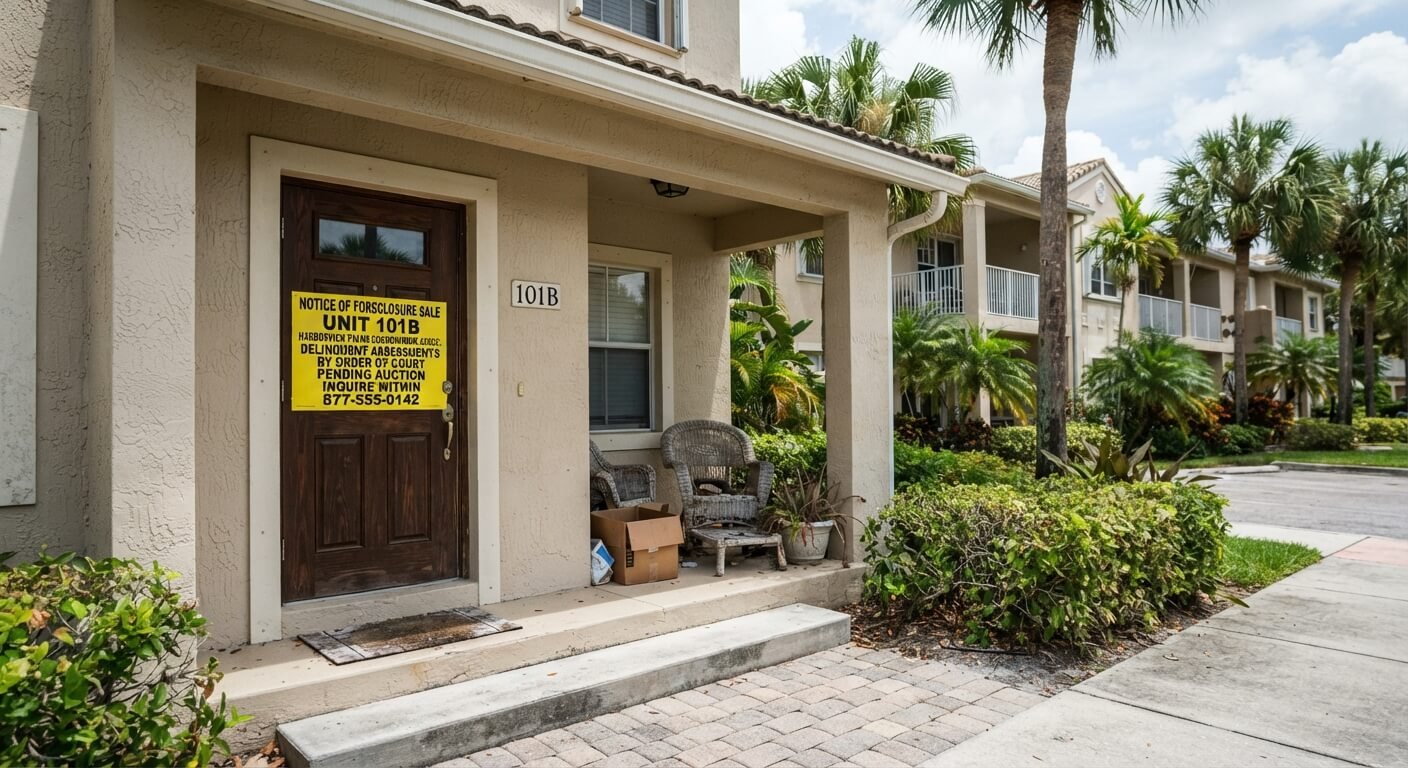
Yes. If you fall behind on condominium assessments in Florida, your association can place a lien on your unit and, subject to statutory requirements, foreclose that lien, much like a mortgage lender can. In most cases this is true even if the unit is your homestead.
Foreclosure is not instant, though. Florida's Condominium Act, Chapter 718 of the Florida Statutes, requires a series of written notices and waiting periods first. Each one is a chance to pay, dispute the amount or work out a plan. This guide explains how the process works, what the association can and cannot charge, and what you can do at each stage.
Why your association can foreclose
When you buy a condo, you agree to pay your share of the building's costs through regular and special assessments. That obligation comes from the declaration of condominium and from section 718.116, which makes each owner liable for every assessment that comes due while they own the unit.
The same section gives the association a lien on the unit for unpaid amounts. Legally, that lien relates back to the date the original declaration was recorded, often decades before you bought. Against a first mortgage, it only takes effect once the association records a claim of lien.
With a lien in place, the association can foreclose the same way a mortgage is foreclosed. It can also sue you for a money judgment instead of, or alongside, foreclosure.
Two details surprise many owners:
- You can inherit a seller's debt. A new owner is jointly liable with the previous owner for assessments that were unpaid at the time of transfer.
- Rent can be redirected. If you rent out your unit and fall behind, the association can demand that your tenant pay rent directly to the association until your balance is paid.
What can and can't lead to foreclosure
Only certain debts are secured by the association's lien. Under section 718.116, the lien covers unpaid regular and special assessments, including those that keep coming due until a final judgment. It also covers interest, at the rate in your declaration or 18% per year if none is set, and administrative late fees of up to $25 or 5% of each late installment, whichever is greater. Reasonable attorney fees and collection costs are included too, but only after the required notices described below have been sent.
Fines are different. Under section 718.303, a fine may not become a lien against your unit. No fine may exceed $100 per violation, and fines for a continuing violation may not exceed $1,000 in the aggregate. An association can sue to collect a fine, but it cannot foreclose on your unit over one.
When you make a partial payment, the law says it is applied first to interest, then late fees, then costs and attorney fees, and only then to the assessment itself. That is why a small partial payment may barely reduce the amount the association says is past due.
The steps before foreclosure
Florida law builds several waiting periods into the process, so foreclosure usually takes months after a first missed payment. Each step requires written notice to you, mostly under section 718.121 and section 718.116.
- Notice of late assessment. Before charging you attorney fees, the association must send a written notice by first-class mail to your address on file and to the unit. It must state what you owe and give you 30 days to pay without attorney fees.
- Notice of intent to record a claim of lien. The association must send this by certified or registered mail and by first-class mail. It cannot record the lien until at least 45 days after the notice is delivered, and the statute generally treats the notice as delivered when it is mailed.
- Claim of lien recorded. The lien expires one year after recording unless the association files a lawsuit to enforce it within that time.
- Notice of intent to foreclose. No foreclosure judgment may be entered until at least 45 days after the association gives you written notice of its intent to foreclose, delivered by hand or by certified or registered mail. If the association does not give this notice at least 45 days before filing suit, and you pay everything owed before final judgment, it cannot recover its attorney fees or costs.
- Foreclosure lawsuit. The case goes through court like a mortgage foreclosure. You have the right to respond and raise defenses.
The association can also apply pressure along the way. Once you are more than 90 days delinquent, it may suspend your use of many common elements and facilities, such as the pool or gym, subject to statutory exceptions. It cannot cut off access to your unit, utility services, parking spaces or elevators. If a monetary obligation is more than $1,000 and more than 90 days delinquent, the association may suspend your voting rights after providing the notices required by law.
Does homestead protect my condo?
Usually not against an assessment lien. Florida's homestead protection is strong against most creditors, but it generally does not stop a condo association from foreclosing for unpaid assessments.
The reason is timing. Section 718.116 expressly gives the association a lien for unpaid assessments and provides that the lien generally relates back to the recording of the original declaration, before any owner moved in. Florida Supreme Court precedent, including Bessemer v. Gersten (1980), recognizes circumstances in which a lien arising from a recorded property obligation can be enforced against homestead property despite Florida's homestead protection.
Homestead protection can still matter for other types of debts. Whether a particular money judgment or other claim can be enforced against homestead property depends on the nature of the debt and the exceptions to Florida's homestead protection. If the association is trying to collect something other than assessments and the charges listed above, ask a lawyer whether it can reach your home at all.
If you're already behind: your options
The earlier you act, the cheaper it is. Once attorney fees start, the balance can grow quickly.
- Pay within the notice windows. Paying within 30 days of the late assessment notice avoids attorney fees. Each later notice is another chance to stop the process before costs pile up.
- Ask for a payment plan in writing. Many associations would rather collect over time than foreclose. Get any agreement signed, and confirm whether collection will pause while you keep to it.
- Check the math. Ask for a full ledger. Make sure fines are not included in the lien amount, that late fees and interest stay within legal limits, and that partial payments were applied correctly.
- Review the records. Owners have a right to inspect the association's official records. For a special assessment, that includes how it was approved and noticed.
- Contest the lien. If you dispute the lien, you can record a notice of contest. The association then generally has 90 days to file suit, or the lien becomes void. That forces the dispute into the open quickly.
- Respond to any lawsuit. If you are served, do not ignore it. Missing the deadline to respond can lead to a default judgment.
- Consider selling. If the debt is more than you can carry, selling before foreclosure lets you control the timing. The association's estoppel certificate will show the payoff amount, which is usually paid at closing.
Bankruptcy can temporarily stop a foreclosure, but it has serious long-term effects and its own rules for association debt. That decision needs a bankruptcy attorney.
Why this is a bigger risk in Miami right now
After the 2021 collapse of Champlain Towers South in Surfside, Florida passed laws requiring structural milestone inspections for older condo buildings and structural integrity reserve studies. For qualifying associations, these laws significantly restrict the ability to waive or reduce reserves for the structural components covered by a structural integrity reserve study, subject to statutory exceptions and alternative funding provisions.
For many older Miami-Dade buildings, that has meant large special assessments to pay for repairs and higher monthly dues to build reserves. For some owners, those higher costs create significant financial pressure. The same lien and foreclosure rules apply to special assessments as to regular dues.
If your building has announced a large assessment, deal with it early. Review how it was approved, ask about payment schedules, and get advice before you miss a payment rather than after. For background, see our guide to condo board duties after Surfside.
When to talk to a lawyer
Talk to a Florida condominium or real estate attorney as soon as you receive a notice of intent to record a lien or a notice of intent to foreclose. Talk to one right away if you are served with a lawsuit. Early advice is cheaper than defending a foreclosure, and a lawyer can spot notice defects or improper charges you might miss.
Bring these to your first consultation:
- Every notice and letter from the association or its lawyer, with envelopes showing how they were mailed
- Your account ledger and records of payments you made
- The declaration of condominium, bylaws and any rules on assessments and late fees
- Board meeting notices and minutes for any special assessment
- Any payment plan or settlement offer, in writing
You can find condominium and real estate attorneys in Miami-Dade, Broward, Palm Beach and Monroe Counties in the Miami Legal Guide directory.