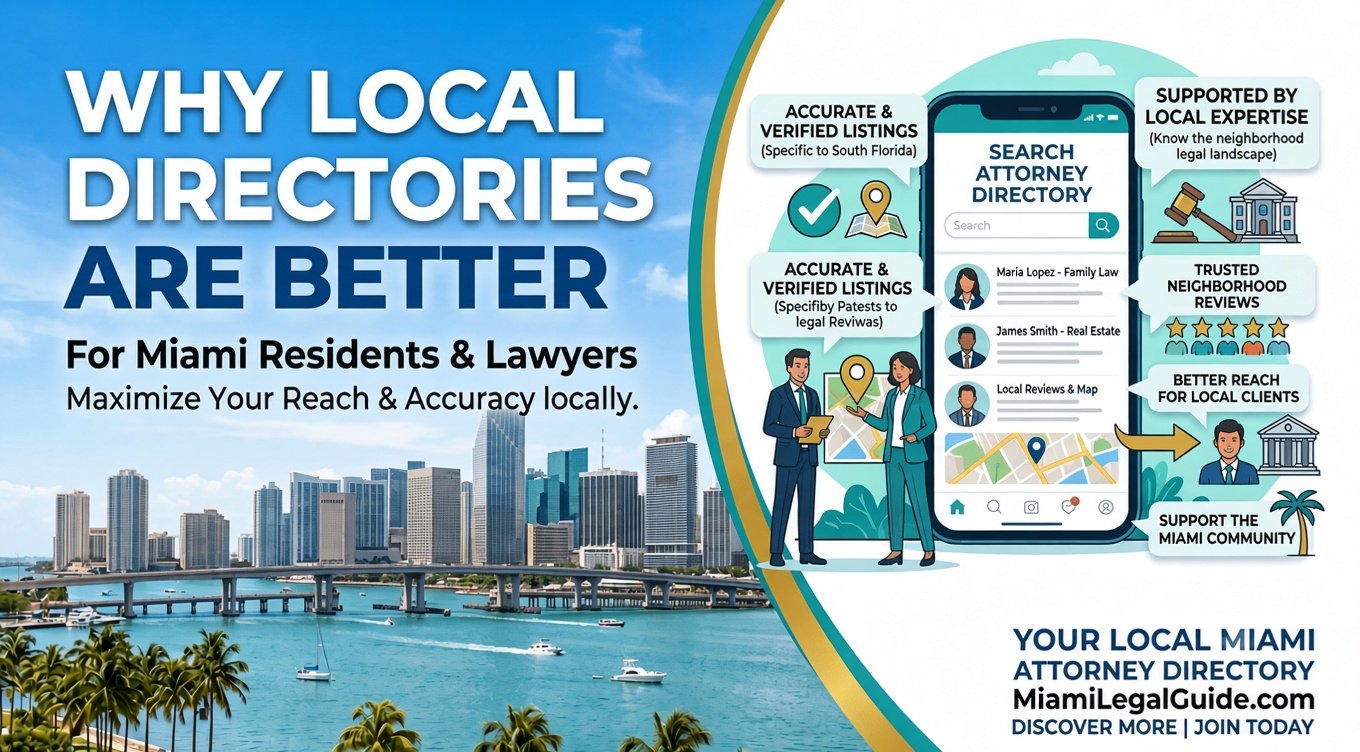
South Florida has thousands of practicing attorneys. Miami alone has more lawyers than most entire states. So when a family in Key West or a small business in Fort Lauderdale needs legal help, where do they actually look?
Increasingly, the answer is online. That shift changes how attorneys should think about visibility.
Local Search Is Now the Default
A few years ago, most people found a lawyer through a friend or a family referral. That is changing fast. According to research highlighted by Think with Google, nearly half of all Google searches now carry local intent. People are not just searching for a lawyer. They are searching for a lawyer near them, in their own city or county.
This matters even more for legal services specifically. Clio, a leading legal practice management company, compiles marketing data each year on how clients search. Over a third of people looking for an attorney now start that search online. Often, that happens before they ever ask someone they know for a recommendation. That is a real shift in behavior, not a passing trend.
For attorneys, this means visibility in local search results is no longer optional. It is often the first impression a potential client will have of your firm. That happens before they ever visit your website or pick up the phone.
The Problem With National Directories
Many of the well-known legal directories are built to cover the entire country. Every state, every city, every practice area, all in one massive database. That scale sounds impressive. But it creates a real problem for smaller, regional firms.
A South Florida attorney listed in a directory of fifty thousand firms is easy to overlook. Visitors searching a national database are not always looking in the right city. Competitors from states you will never practice in show up right next to your listing. Your firm becomes one name in a very long, very generic list, with no particular reason to stand out.
National directories are not built around any single community. They are built to cover as much ground as possible. Depth gets traded for breadth. Local relevance is often the first thing to get lost.
Why Local Directories Work Differently
A directory built specifically for one region works the opposite way. Every listing exists for a reason. Every firm is relevant to the person searching, because the entire directory only covers one area.
For South Florida specifically, that means a directory organized around the Florida Keys, Miami-Dade, Broward, and Palm Beach counties. A visitor searching for a family lawyer in Key West sees firms that actually serve Key West. A visitor in Fort Lauderdale sees attorneys who actually practice in Broward County. Nothing irrelevant gets in the way.
This is not just more convenient for the visitor. It is a real advantage for the firm too. Instead of competing with attorneys nationwide, a listed firm competes only with other firms serving the same region. That is a much smaller, much more relevant pool. It is made up of people who were never going to call an out-of-state number anyway.
A focused local directory also tends to build a different kind of trust. Visitors are not scrolling through thousands of irrelevant results just to find someone nearby. They are looking at a shorter, more useful list, built specifically for where they actually live.
What This Means for South Florida Attorneys
If your firm serves clients in the Keys, Miami-Dade, Broward, or Palm Beach County, a regional presence is worth building deliberately. That does not mean abandoning national platforms entirely. It means recognizing that local visibility often matters more. That is especially true as more searches carry local intent by default.
A simple way to think about it: national directories help you get found by everyone, everywhere. Local directories help you get found by the people who can actually become your clients. Those are the people searching in the specific cities and counties you actually serve.
For a solo attorney or a small firm, that distinction is not small. It is often the difference between being one listing among thousands. Or, instead, being one of a handful of relevant options for someone searching in your own backyard, ready to make a call right now.
A Regional Approach, By Design
This is exactly the idea behind Miami Legal Guide. Every listing exists for one region: the Florida Keys through West Palm Beach. Nothing broader, nothing diluted, and nothing borrowed from a national template.
For attorneys weighing where to spend limited marketing time, a focused regional directory is a small, low-effort choice. It puts your firm in front of exactly the people searching in your area. Local search keeps growing every year. That kind of focused visibility is likely to matter even more in the years ahead, not less.